October 24, 2026 | Semiconductor Manufacturing & Supply Chain Intelligence
NVIDIA is expanding its semiconductor manufacturing and testing supply chain, with new investments designed to increase production capacity, support artificial intelligence (AI) infrastructure, and strengthen domestic manufacturing capabilities.
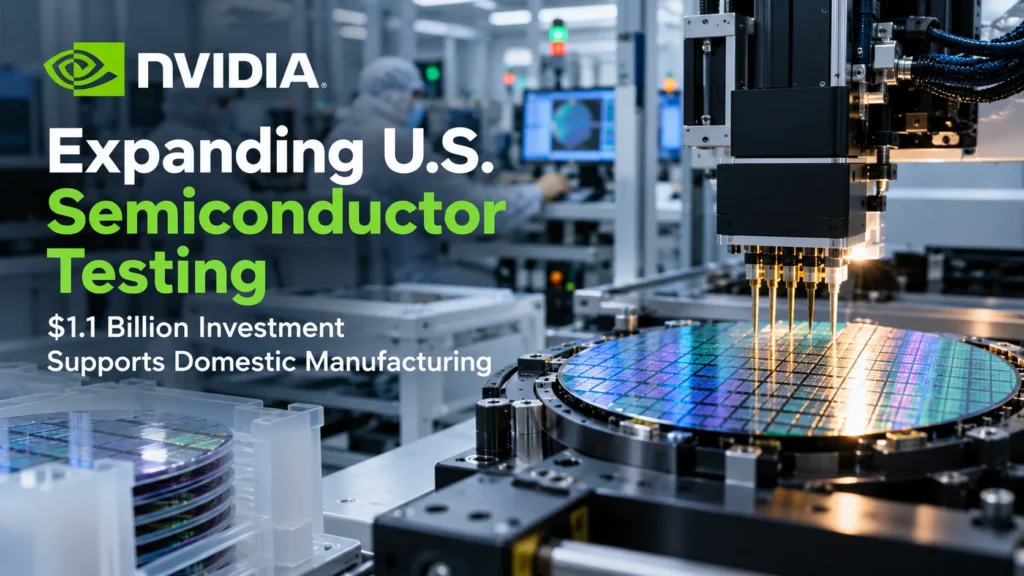
On October 21, 2026, NVIDIA announced a series of agreements with global semiconductor suppliers, including a $1.1 billion capacity reservation advance to King Yuan Electronics (KYEC) to support new semiconductor testing facilities and equipment in the United States.
The company expects its total global semiconductor testing capacity to double between 2026 and 2027, supported by expansions in the United States, Taiwan, and Singapore.
The announcement highlights an important shift in the semiconductor industry: manufacturing sufficient quantities of advanced chips is only one part of meeting AI demand. Packaging, testing, substrates, and system integration must also expand to support growing production requirements.
NVIDIA’s $1.1 Billion Commitment to U.S. Semiconductor Testing
NVIDIA’s agreement with KYEC represents a significant commitment to expanding domestic semiconductor testing infrastructure.
According to NVIDIA’s announcement, the capacity reservation advance will support new U.S. testing facilities and equipment, with high-volume production targeted for April 2027.
Semiconductor testing is an essential stage of production. Before chips can be incorporated into electronic systems, manufacturers must verify that devices meet electrical, functional, performance, and reliability requirements.
Testing becomes increasingly important as semiconductor designs grow more complex and production volumes increase.
Although NVIDIA expects its overall testing capacity to double, that projection includes international operations. The company has not publicly established a specific percentage increase attributable solely to the new U.S. facilities in this announcement.
Why Semiconductor Testing Capacity Matters
Expanding semiconductor fabrication without sufficient testing capacity can create production bottlenecks.
Advanced processors require extensive verification before they can be integrated into servers, computing platforms, and other electronic assemblies.
Several manufacturing considerations make testing capacity particularly important:
- Production throughput: Testing resources must keep pace with increases in semiconductor output.
- Quality assurance: Electrical and functional verification helps identify nonconforming devices before downstream integration.
- Supply chain reliability: Additional testing capacity can reduce dependence on individual facilities or regions.
- Manufacturing scalability: Higher production volumes require coordinated equipment capacity, trained personnel, and standardized processes.
- Product reliability: Verification is an important part of ensuring semiconductor devices perform as intended.
For manufacturers and purchasing teams, increased chip availability does not automatically eliminate supply chain constraints. Semiconductor packaging, testing, electronic assembly, and supporting components must all remain aligned.
A Broader Expansion Across the Semiconductor Supply Chain
NVIDIA’s announcement extends beyond semiconductor testing.
The company is working with several established suppliers to expand different stages of the manufacturing process.
Advanced package substrates
NVIDIA expects agreements with IBIDEN, Samsung Electro-Mechanics, and Unimicron to help increase substrate capacity for its products by approximately 2.5 times over the next three years.
Package substrates provide critical electrical connections between semiconductor devices and the systems in which they operate.
Advanced semiconductor packaging
NVIDIA and Amkor plan to expand advanced packaging capacity in South Korea, targeting an increase of more than 300% in interposer wafer capacity by the end of 2028.
Separately, NVIDIA and Amkor announced a $1.5 billion multi-year agreement in July 2026 to support advanced packaging and testing development in the United States.
Optical interconnect technologies
NVIDIA is also working with Siliconware Precision Industries (SPIL) to expand optical-engine capacity for co-packaged optics.
These technologies support the high-speed connections required by increasingly large AI computing systems.
Together, these investments demonstrate how semiconductor production depends on a coordinated network of specialized suppliers rather than chip fabrication alone.
What This Means for U.S. Electronics Manufacturing
The growth of domestic semiconductor testing has potential implications for the broader American electronics manufacturing industry.
As semiconductor capacity expands, manufacturers supporting electronic assemblies and computing infrastructure may experience changes in component demand, qualification requirements, production schedules, and supplier availability.
Three areas deserve particular attention.
1. PCB Assembly and Electronic Manufacturing
Semiconductor devices ultimately become part of larger electronic systems.
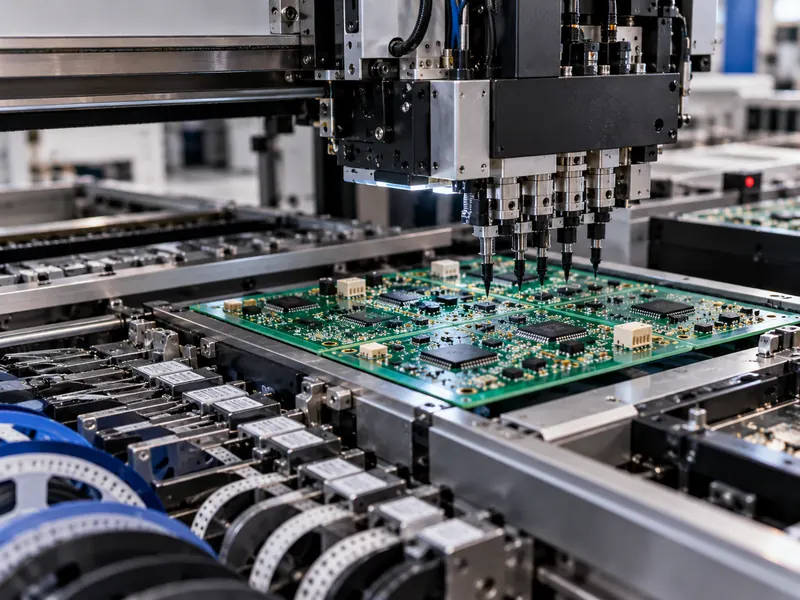
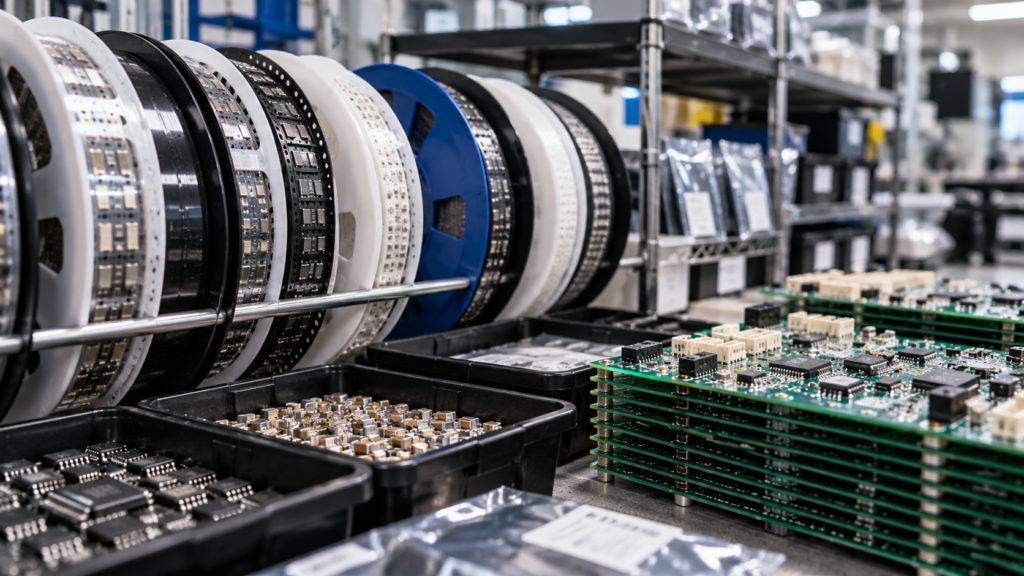
These systems depend on printed circuit boards, electronic components, interconnects, and manufacturing processes capable of meeting demanding performance requirements.
Continued investment in AI infrastructure could create additional demand for qualified electronics manufacturing services, although the timing and scale of opportunities will vary by market and supplier.
2. Supply Chain Planning and Component Availability
Manufacturers should continue monitoring component availability, production lead times, and supplier capacity.
An expansion in semiconductor testing does not necessarily translate into immediate improvements in availability for every semiconductor category.
AI processors, industrial controllers, analog devices, and other electronic components operate within different supply chains and may experience different capacity constraints.
Maintaining qualified sourcing options and communicating forecasts remain important parts of effective procurement planning.
3. Testing, Traceability, and Manufacturing Quality
As electronic systems become more complex, quality management and manufacturing traceability become increasingly important.
For electronics manufacturers, this includes maintaining appropriate inspection procedures, production documentation, functional testing, and component traceability where required.
Although semiconductor-level testing differs substantially from printed circuit board assembly testing, both contribute to the quality and reliability of finished electronic products.
The Broader Direction of American Semiconductor Manufacturing
NVIDIA’s latest announcement builds on earlier U.S. manufacturing initiatives.
In April 2025, the company outlined plans to manufacture AI supercomputers in the United States through partnerships involving TSMC, Foxconn, Wistron, Amkor, and SPIL.
Those plans included semiconductor production in Arizona and AI system manufacturing in Texas.
In July 2026, Wistron opened a 324,000-square-foot facility in Fort Worth to manufacture advanced NVIDIA computing systems.
The addition of new semiconductor testing capacity represents another step toward expanding the domestic infrastructure supporting advanced computing.
However, the semiconductor supply chain remains global. Many of NVIDIA’s announced capacity expansions are located outside the United States, reflecting the international nature of semiconductor manufacturing.
What Manufacturers Should Watch Next
Several developments will help determine the impact of NVIDIA’s latest investments:
- Whether KYEC achieves its targeted April 2027 U.S. high-volume testing ramp.
- How quickly additional testing capacity becomes available across the United States, Taiwan, and Singapore.
- Whether planned substrate and advanced packaging expansions achieve their announced schedules.
- How increased AI infrastructure production affects electronic component availability and manufacturing lead times.
- Whether related manufacturing investments create additional opportunities for domestic electronics suppliers.
These developments will be important for manufacturers, engineers, and procurement teams evaluating their supply chain strategies.
Final Outlook
NVIDIA’s semiconductor testing expansion reflects the growing need to strengthen the manufacturing infrastructure behind advanced computing.
The investment in U.S. testing facilities, together with broader international expansion in substrates, packaging, and optical technologies, underscores the complexity of supporting next-generation AI systems.
For electronics manufacturers, the lesson extends beyond AI processors. Reliable manufacturing requires coordination across component sourcing, electronic assembly, testing, and final system integration.
As semiconductor investments continue, businesses that maintain strong supplier relationships, disciplined quality processes, and flexible manufacturing strategies will be better positioned to respond to changing production requirements.
Supporting Electronics Manufacturing and Supply Chain Needs
Trident Industries works with manufacturing partners to support customers requiring PCB assembly, cable and wire harness manufacturing, custom interconnects, and electronic system integration.
Whether developing a new product or evaluating manufacturing alternatives, Trident helps connect customers with manufacturing capabilities aligned to their project requirements.
Explore our electronics manufacturing capabilities or contact Trident to discuss your next project.
Sources
- NVIDIA — NVIDIA and Supply Chain Partners Expand Capacity to Accelerate AI Infrastructure Buildout (October 21, 2026)
- Amkor Technology — Strategic Partnership with NVIDIA (July 23, 2026)
- NVIDIA — American-Made AI Supercomputers (April 14, 2025)
- NVIDIA — Wistron Opens Fort Worth Manufacturing Plant (July 21, 2026)